A workplace noise assessment report provides more than a collection of decibel readings. It brings together noise measurements, workplace observations and information about how work is performed to help employers understand where noise risks may exist, which workers or work groups may be affected and what practical actions can be considered to better manage exposure.
For business owners, safety managers and operational leaders, the report provides a clear record of the assessment and supports informed decisions about noise controls, hearing protection, audiometric testing and workplace hearing conservation programs.
The exact content of a workplace noise assessment report will depend on the workplace, purpose and agreed scope of the assessment. A preliminary noise assessment may focus on identifying noise hazards and areas requiring further investigation, while a more detailed assessment may include personal exposure monitoring and calculations to establish worker exposure.
Assessment Scope and Workplace Details
The report should explain why the workplace noise assessment was completed and identify the areas, activities or worker groups included.
This may include:
- Workplace areas and departments assessed
- Plant, machinery and equipment operating during testing
- Tasks performed by workers
- Shift lengths, task durations and work patterns
- Existing noise controls and hearing protection requirements
- Operating conditions during the assessment
- Any activities or areas outside the assessment scope
This context is important because workplace noise exposure is influenced by both the level of noise and the amount of time a worker is exposed to it.
Assessment Method and Equipment
A professional report should outline how the workplace noise assessment was conducted.
Depending on the type and scope of assessment, this may include:
- Measurement locations
- Tasks, plant and equipment observed
- Measurement durations
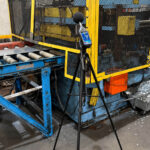
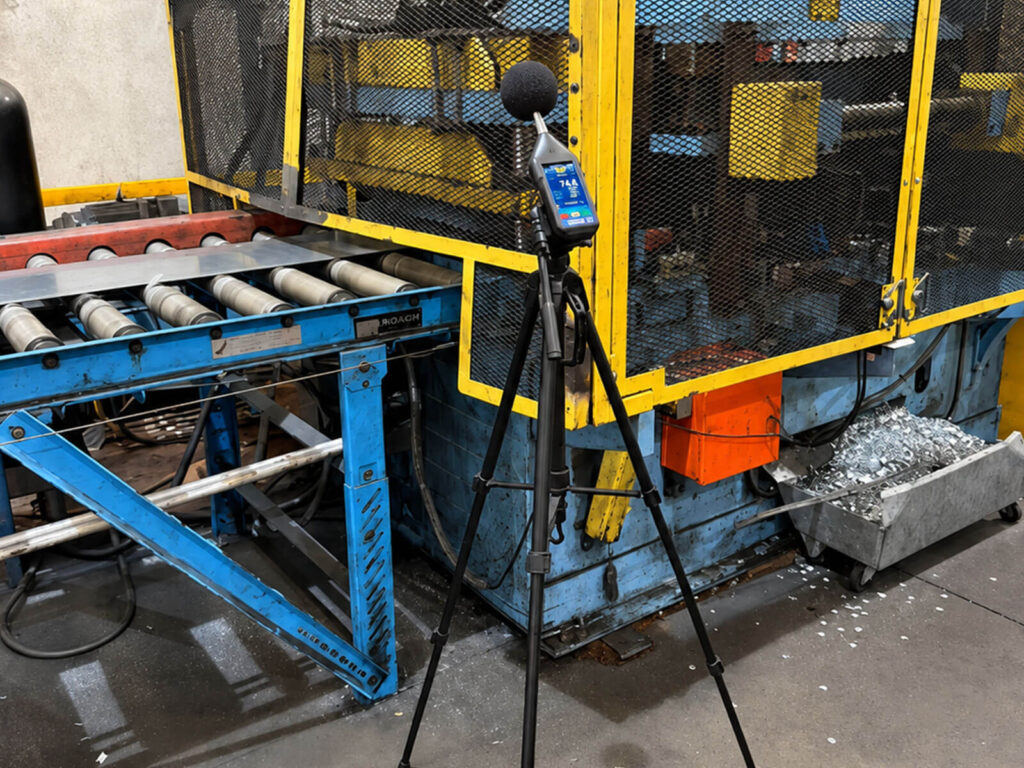
- Spot or task-based noise measurements
- Operating conditions during the assessment
A preliminary assessment may focus on workplace observations and representative spot or task-based measurements to identify potential noise hazards and determine whether further investigation is required. More detailed assessments may involve longer measurement periods or personal monitoring to better establish individual worker exposure.
The report should also identify the sound-measuring equipment used, its calibration status and any relevant field calibration checks completed before and after testing.
Workplace Noise Measurements
The findings section presents the noise levels recorded throughout the workplace.
Depending on the assessment scope, the report may include:
- Average or equivalent continuous noise levels
- Maximum and peak noise levels
- Task-based measurements
These findings are generally presented in tables or other clear formats to help employers identify higher-noise areas, activities and sources.
Importantly, an individual decibel reading does not necessarily establish a worker’s daily noise exposure. Noise level, duration and the pattern of exposure all need to be considered.
Findings and Recommendations
Depending on the type and scope of assessment, the report may identify:
- Work areas, plant, tasks and/or equipment with the potential to expose workers to noise at or above the workplace noise exposure standard
- Work groups that may require further monitoring
This helps employers understand which workers may be most affected rather than treating the workplace as one uniform noise environment.
Comparison With the Workplace Exposure Standard
Assessment findings should be considered against the applicable workplace noise exposure standard.
In Queensland, the exposure standard for noise is:
- LAeq,8h of 85 dB(A) – the eight-hour equivalent continuous noise exposure; or
- LC,peak of 140 dB(C) – the peak noise level.
Noise levels need to be considered together with exposure duration. A high-noise task performed for a relatively short period can make a significant contribution to a worker’s daily exposure, while lower noise levels experienced over an extended period can also accumulate.
Depending on the assessment methodology and information available, the report may calculate worker exposure or identify activities, areas or noise sources that indicate the exposure standard may be approached or exceeded and require further investigation.
Existing Noise Controls
The workplace noise assessment may also consider measures already being used to control workplace noise.
These could include:
- Equipment enclosures and barriers
- Isolation of noisy machinery
- Preventive maintenance
- Separation of workers from noise sources
- Restricted access to noisy areas
- Task scheduling or reduced exposure times
- Hearing protection zones
- Earplugs and earmuffs
- Worker training and instructions
Where appropriate, the report may comment on whether these controls appear effective or require further review.
Audiometric Testing Considerations
Workplace noise monitoring and audiometric testing perform different but complementary roles.
A noise assessment examines the work environment and potential worker exposure to noise, while audiometric testing measures an individual worker’s hearing thresholds.
Noise assessment findings can help employers identify roles, tasks and work groups that should be considered when reviewing hearing protection requirements and their obligations to provide audiometric testing.
Where workers are required to use personal protective equipment to protect them from the risk of hearing loss associated with noise that exceeds the exposure standard, audiometric testing requirements apply under Queensland’s Work Health and Safety Regulation 2011.
Assessment Limitations
A professional report should also identify any limitations or assumptions that may affect how the findings are interpreted.
Workplace noise can change considerably depending on production levels, equipment, activities and operating conditions. Where the conditions observed are not representative of normal operations, or available information is insufficient to reliably assess exposure, further assessment may be appropriate.
What Should You Do With the Report?
A workplace noise assessment report should be used as a practical risk-management resource. Employers should review the findings and recommendations with relevant managers, workers and health and safety representatives and determine what actions should be prioritised, implemented and monitored.
Further assessment may be needed when:
- New plant or equipment is installed
- Production processes change
- Work areas are redesigned
- Shift lengths or task durations increase
- New noise concerns are identified
- Noise controls are introduced or modified
Keeping the report accessible also helps support internal safety records, compliance reviews and future workplace assessments.
Arrange a Preliminary Workplace Noise Assessment
Onsite Testing provides professional preliminary workplace noise assessments for businesses across Brisbane, South East Queensland and regional Queensland.
Our assessments combine workplace observations, noise measurements using a calibrated Class 1 Sound Level Meter, and practical reporting to help employers identify potential noise risks, understand where further action may be required and make informed decisions about workplace noise management.
Call 07 3282 7082 or submit an online enquiry to request a free, no-obligation quote.