Audiometric Testing
Professional audiometric testing across Queensland, brought directly to your workplace, helping you monitor worker hearing, minimise operational disruption and meet workplace health and safety obligations.
Workplace hearing tests delivered at your WORKsite.
From 29/07/2025, audiometric testing became mandatory in Queensland under the Work Health and Safety Regulation 2011 for workers who are required to wear hearing protection due to noise exceeding the exposure standard.
Our mobile testing service brings audiometric testing directly to your workplace, reducing travel, downtime and operational disruption. Testing can be coordinated around shifts, production schedules, shutdowns and site requirements, from small teams to large, multi-site workforces.
Testing is conducted by competent technicians using calibrated, industry-standard equipment, with clear and timely reporting to support hearing conservation, workplace records and ongoing compliance management.
Onsite Testing supports employers across manufacturing, construction, transport, engineering, government, mining, agriculture, maritime and other noise-exposed industries.

Mobile Testing Units Across QLD
Our professionally fitted sound-treated and air-conditioned mobile units allow hearing tests to be completed conveniently at your workplace.
WORKPLACE Hearing Test Specialists
Audiometric testing is conducted by trained technicians experienced in working with industrial workplaces across Queensland.
CoMprehensive Testing & Clear Reports
Receive organised and timely reporting to support your hearing conservation programs, workplace records and ongoing compliance management.
Multi-Site Testing Capabilities
We can coordinate audiometric testing across multiple workplaces, project sites and regional Queensland locations.
Audiometric Testing Services
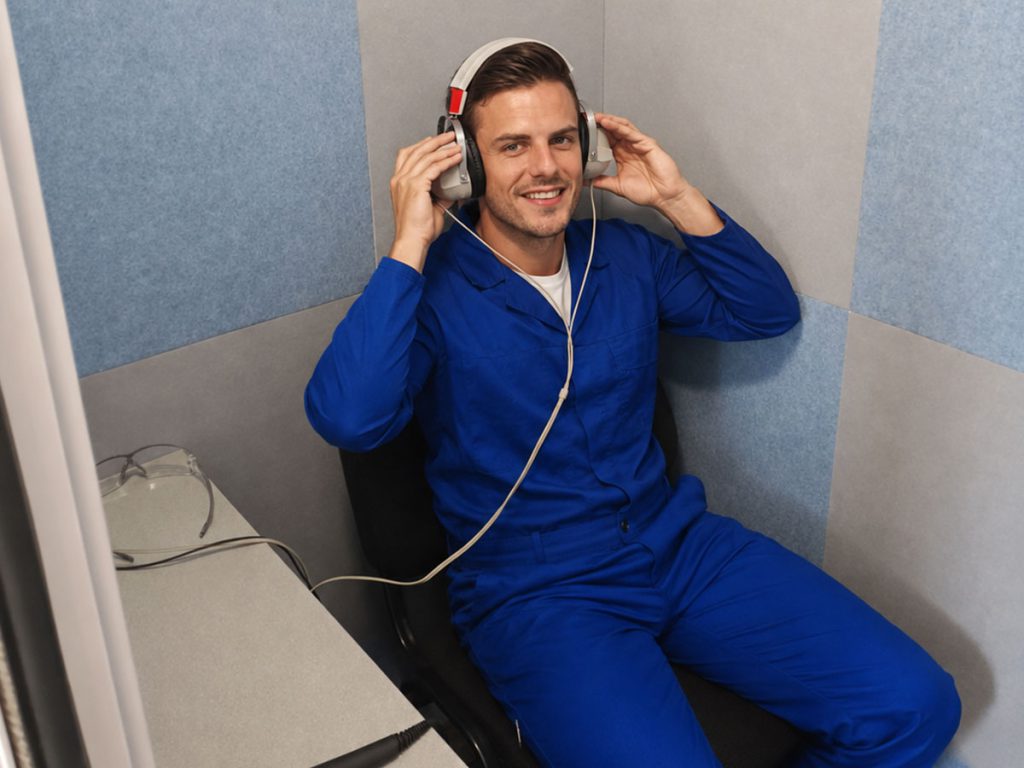
Workplace audiometric testing uses audiometry to measure the quietest sounds a worker can hear across a range of frequencies.
A common method is pure tone audiometry (PTA), where tones are presented through headphones and each ear is assessed separately to establish hearing threshold levels.
This audiometric examination provides a baseline or monitoring result that can be compared over time as part of an effective workplace hearing conservation program.
PRE-QUALIFIED SUPPLIER FOR LOCAL GOVERNMENT
Onsite Testing is a Pre-Qualified Supplier of Audiometric Testing for Local Government under the Local Buy Arrangement, People & Wellbeing Services (Human Resources) LB328. This pre-qualification enables eligible Queensland councils and local government organisations to engage our audiometric testing services through an established procurement arrangement.
Understanding Audiometric Testing
What employers need to know about workplace hearing tests.
Why Audiometric Testing Is Important
From 29 July 2025, audiometric testing requirements came into effect under Queensland’s Work Health and Safety Regulation 2011.
- Exposure to excessive noise, whether at work or elsewhere, can cause permanent hearing damage.
- PCBUs (employers) must provide audiometric testing for workers who are required to wear hearing protection due to workplace noise exceeding the exposure standard:
- LAeq,8h of 85 dB(A) (average noise exposure of 85 dB(A) over an eight-hour working day); or
- LC,peak of 140 dB(C)2 (a peak noise level of 140 dB(C))
- Audiometric testing helps protect workers and your business. Regular testing allows hearing levels to be monitored over time and can identify changes that may indicate a need to review workplace noise exposure, controls or hearing protection.
- Establishing a baseline early provides an important reference point. Testing within three months of commencement of employment establishes a record of worker hearing levels at that time. Future results can then be compared against the baseline to identify changes over time. Without an early baseline, it can be more difficult to determine whether hearing loss was already present when the worker commenced, including if a future workers’ compensation claim arises.
- Failure to meet mandatory audiometric testing requirements may also expose a PCBU to regulatory action.
- Not sure about your workplace noise levels? Onsite Testing can conduct a preliminary noise assessment to help identify noise hazards.
When Audiometric Testing Is Required
Audiometric testing is required where a worker is required to wear hearing protection to protect against the risk of hearing loss from workplace noise that exceeds the exposure standard.
For workers commencing this work on or after 29 July 2025, audiometric testing must be conducted:
- Within three months of commencement (reference/baseline test)
- At least every two years thereafter (monitoring test)
For existing workers (that started prior to 29 July 2025), audiometric testing must be conducted:
- First test before 29 July 2027 (reference/baseline test)
- At least every two years thereafter (monitoring test)
What Audiometric Testing Involves
Audiometric testing takes approximately 15 minutes per worker and is a painless, non-invasive test that measures a person’s hearing across a range of frequencies. Wearing headphones, the worker responds to sounds at different frequencies and volumes to establish their hearing threshold levels. Results are recorded and reported following the test.
- Audiometric testing must be conducted in accordance with AS/NZS 1269.4:2014 to meet the requirement in section 58 of the Work Health and Safety Regulation 2011.
- We bring testing directly to your workplace, helping minimise downtime and disruption to normal operations. Simply book the time required based on the number of workers to be tested, and we will provide a testing schedule for your team on the day.
- Prefer off-site testing? Individual appointments can also be made at our Head Office in Ipswich, Queensland.
What Is Included
Pre-testing Co-ordination
- Clear communication of requirements, including information for workers to help them prepare for what to expect on the day.
- Worker scheduling templates to maximise testing efficiency and minimise disruption to operations.
Onsite Assessment
- Testing conducted by a competent technician using calibrated, industry-standard audiometric equipment in accordance with AS/NZS 1269.4:2014.
- Testing environment monitored to meet Maximum Permissible Ambient Noise Levels (MPANL).
Reporting
- Customer Summary Report providing a high-level overview of workforce results.
- Individual Worker Reports with easy-to-understand audiogram results, outcomes and recommendations where applicable.
- Confidential, secure electronic delivery of reports.
- Reports provided within five business days of testing.
Audiometric Testing FAQs
Clear answers about workplace hearing tests, testing requirements and what to expect.
What is audiometric testing?
Audiometric testing is a quick, painless, non-invasive test that measures the softest sounds a person can hear across a range of frequencies. Each ear is tested separately using headphones, with the results recorded on an audiogram to provide a picture of the worker’s hearing levels at the time of testing.
The results can be compared with future tests to monitor changes in hearing over time and help identify whether further investigation or action may be required.
Do I need to consult with workers about audiometric testing?
Yes, PCBUs (Employers) are required to consult with their workers about matters relating to their health and safety.
How can I get my workers tested?
Contact us at Onsite Testing to arrange compliant testing for your workers to meet your regulatory obligations:
P: 07 3282 7082
E: bookings@onsitetesting.com.au
Who is required to pay for audiometric testing?
Employers (PCBUs) are responsible for organising and paying for audiometric tests for their workers.
Who requires audiometric testing?
PCBUs (Employers) must provide audiometric testing for workers who need hearing protection due to noise levels exceeding the exposure standard:
- LAeq,8h of 85 dB(A)1, or (a worker’s average noise exposure over a standard 8-hour workday)
- LC,peak of 140 dB(C)2(the loudest instantaneous noise peak a person is exposed to)
Although not always the case, as a general guide, if workers require hearing protection, they most likely require audiometric testing. The Code of Practice (Managing noise and preventing hearing loss at work) provides examples of the length of time a person can be exposed, during an eight hour shift, before the standard (LAeq,8h of 85 dB(A)) is exceeded, together with some common noise sources and their typical sound levels:
| Noise level dB(A) | Exposure time before standard is exceeded | Common noise sources |
| 87dB | 4 hours | Power drill |
| 90dB | 2 hours | Lawnmower |
| 94dB | 1 hour | Circular saw |
| 98dB | 15 minutes | Hammering nails |
| 100dB | 15 minutes | Sheet-metal workshop |
| 130dB | 0.9 seconds | Rivet hammer |
If you are unsure or would like to enquire about our noise testing services, contact Onsite Testing for more information:
- P: 07 3282 7082
- E: enquire@onsitetesting.com.au
What is a pure tone audiometry test?
A pure tone audiometry test, commonly referred to as pure tone audiometry or PTA, measures the quietest sounds a person can hear at different frequencies. During the test, tones are presented through headphones and each ear is assessed separately to establish the worker’s hearing thresholds.
Is a PTA audiometry test the same as pure tone audiometry?
Yes. PTA stands for pure tone audiometry, so the terms generally refer to the same type of hearing assessment. Pure tone audiometry measures hearing thresholds across different frequencies and is commonly used as part of workplace audiometric testing.
Do employers have to do a noise assessment?
PCBUs (employers) have a duty to identify reasonably foreseeable hazards and manage risks to health and safety associated with workplace noise. A noise assessment helps determine workers’ exposure to noise, whether the exposure standard is exceeded and what control measures may be required.
The Managing Noise and Preventing Hearing Loss at Work Code of Practice 2021 provides guidance on identifying noise hazards and assessing workplace noise risks. The type and extent of assessment required will depend on the workplace, noise sources and work activities.
Not sure where to start? Onsite Testing can conduct a preliminary noise assessment to help identify activities, processes and areas where noise levels may approach or exceed the exposure standard.
Do all workers require audiometric testing at a worksite?
No, only workers who are required by the PCBU (Employer) to wear hearing protection as a control measure where noise exceeds the exposure standard are required to have mandatory audiometric testing.
How often is audiometric testing required?
- From July 29, 2025 audiometric testing for new workers must be conducted:
- within 3 months of a worker starting the relevant work
- at least every 2 years thereafter
- From July 29, 2025 audiometric testing for existing workers must be conducted:
- first test completed before 29 July 2027
- at least every 2 years thereafter
What happens if the audiometric testing identifies hearing loss?
Audiometric testing conducted as part of a workplace hearing conservation program is a screening and monitoring assessment, not a medical diagnosis. If testing identifies hearing loss or a change in worker’s hearing levels, appropriate follow-up will be recommended. This may include referral for further medical or audiological assessment.
Where a change in hearing is identified over time during monitoring testing, the employer should also investigate possible causes and review workplace noise exposure and existing control measures.
I’m not sure if my workers should be wearing hearing protection, what should I do?
If you are unsure whether workers are exposed to hazardous noise, the first step is to assess workplace noise exposure. A noise assessment can help identify noise hazards, determine whether workers may be exposed above the workplace exposure standard and identify where noise controls or hearing protection may be required.
Onsite Testing can conduct a preliminary noise assessment to help identify activities, processes and areas where noise levels may approach or exceed the exposure standard of:
- LAeq,8h of 85 dB(A) (average noise exposure of 85 dB(A) over an eight-hour working day); or
- LC,peak of 140 dB(C)2 (a peak noise level of 140 dB(C))
Please contact us to find out more about preliminary noise assessments:
- P: 07 3282 7082
- E: enquire@onsitetesting.com.au
When did it become a requirement for workers in Queensland to undertake audiometric testing?
From 29 July 2025 WorkSafe Queensland made changes to the Work Health and Safety Regulation 2011 which introduced new audiometric testing requirements for workers.
My worker was tested before I employed them. Is this test still able to be used?
Yes if:
- The test is done within three months before the worker has commenced the work.
- The test is done in accordance with the procedures in AS/NZS 1269.4:2014 Occupational Noise Management – Auditory
Assessment.
Who can conduct audiometric testing?
An audiometric test must be performed by a competent person, with the necessary level of training and experience to perform the test, interpret the results and present them in a manner that enables persons at the workplace to make appropriate decisions.
Our testers here at Onsite Testing are trained and experienced in the aspects of Audiometric testing and meet the requirements of a competent person.
Who gets the audiometric test results?
The results of the audiometric testing are provided to the worker and employer (with the workers consent). Test results and recommendations are explained to the worker.
Are audiometric test results required to be kept?
The PCBU (Employer) must ensure audiometric test results are kept as confidential documents and retained in accordance with applicable employee record and privacy requirements, including legislation such as the Fair Work Act 2009 (Cth) and Privacy Act 1988 (Cth).
When assessing compliance with workplace noise and audiometric testing requirements, WHSQ inspectors may request evidence that required testing has been completed and relevant records maintained.
Audiometric results contain confidential information. Workers are provided with their individual results and consent is obtained for the release of individual results to their employer. Onsite Testing securely stores audiometric testing records as confidential information and manages personal information in accordance with the Australian Privacy Principles.
Are labour hire organisations required to arrange for audiometric tests for their workers?
Yes. Labour hire agencies and host employers share duties for labour hire workers and must consult, cooperate and coordinate to manage workplace risks, including exposure to hazardous noise. Workplace Health and Safety Queensland considers the labour hire agency responsible for organising required audiometric testing.
Are Group Training Organisations (GTO) required to arrange for audiometric tests for their workers?
Both the Group Training Organisation (GTO) and the host employer share duties of care for apprentices. Workplace Health and Safety Queensland considers GTOs responsible for organising required audiometric testing.
Pricing Packages
Request a Quote for Audiometric Testing
Tell us about your workforce, locations and testing requirements, and our team will be in touch to provide a free, no-obligation quote tailored to your workplace and schedule.
"*" indicates required fields