Respirator Face Fit Testing
Quantitative and qualitative respirator face-fit testing in accordance with AS/NZS 1715:2009, helping employers confirm workers can achieve an effective seal with respirator equipment and support workplace health and safety requirements.
We come to you across Brisbane, South East Queensland and regional Queensland, with appointments also available at our Ipswich Head Office.
Protect Every Breath
A respirator only protects when it fits correctly.
Face-fit testing confirms whether a tight-fitting respirator can achieve an effective seal against an individual worker’s face. Because everyone’s face is different, a respirator that fits one worker may not provide an adequate seal for another.
Our preferred methodology is quantitative face-fit testing, which uses specialised equipment to objectively measure respirator fit and produces a numerical fit factor, providing a clear pass/fail result for the specific make, model and size tested. We are also equipped to provide qualitative face-fit testing where appropriate, depending on the respirator type and workplace requirements.
Respirator face-fit testing can be completed at your workplace using our mobile service or by appointment at our Ipswich Head Office.
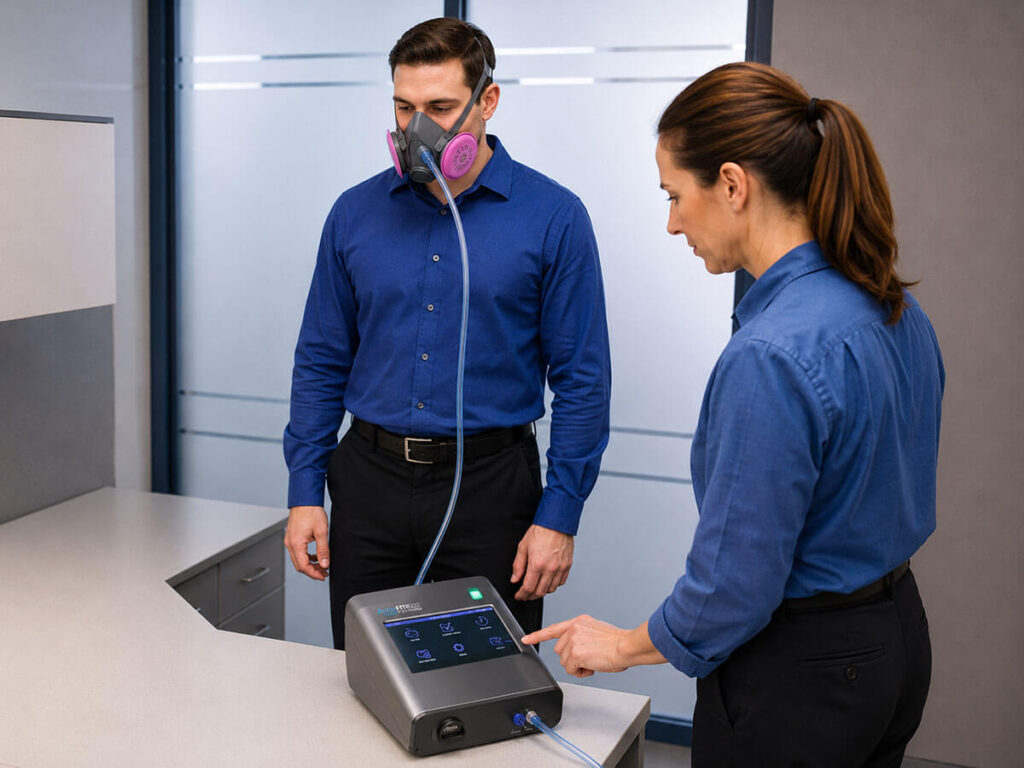
Quantitative Fit Testing
Machine-based testing provides an objective measurement of respirator fit for disposable and reusable half-face and full-face respirators.
Qualitative Testing
Available when requested for suitable disposable and reusable half-face respirators.
Onsite Mobile Service
Our team can attend your workplace to reduce worker travel, downtime and disruption to daily operations.
Individual Fit Test Records
Each worker receives a fit test record detailing the respirator tested and the outcome achieved.
Industries We Support
Practical fit testing for workplaces where respiratory protection matters.
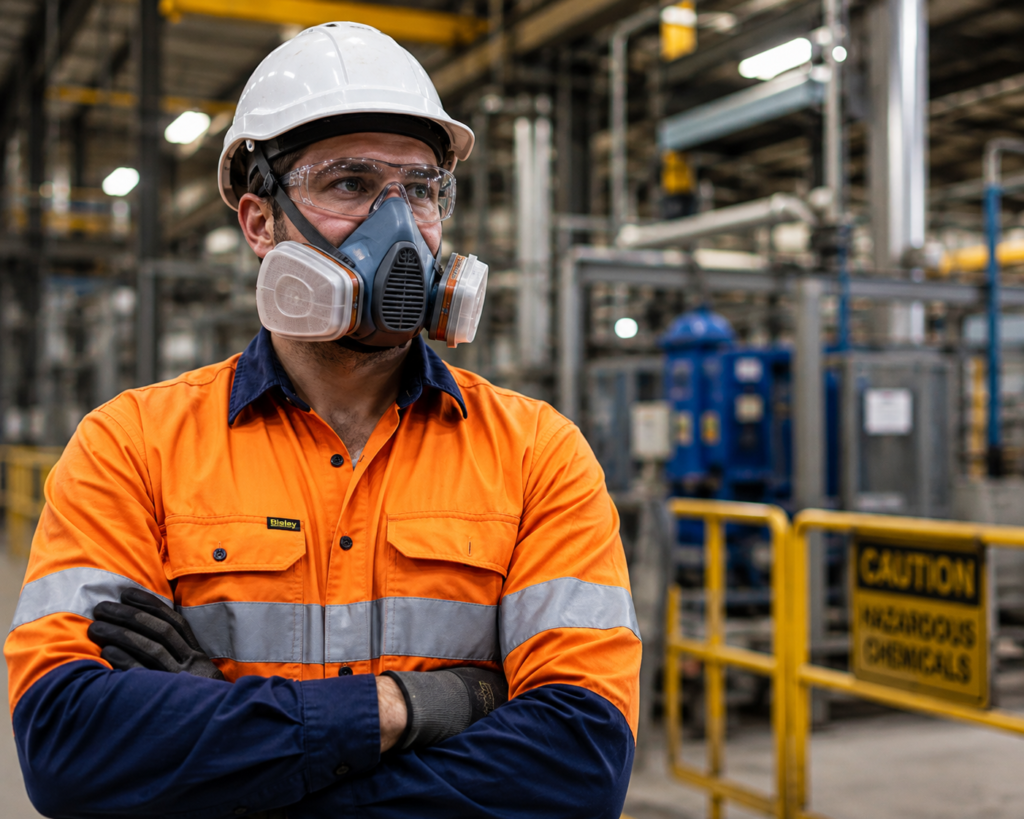
We work with construction, manufacturing, engineering, mining, government, agriculture, transport, maritime and other workplaces where employees may be exposed to dust, silica, fumes, chemicals, bioaerosols or other airborne contaminants.
Each worker receives practical guidance on correctly inspecting, fitting and wearing their respirator, along with an individual fit test record documenting the outcome of the assessment.
Understanding Face Fit Testing
What employers and workers need to know about achieving an effective respirator fit.
Why Respirator Face Fit Testing Is Important
Under section 44 of the Work Health and Safety Regulation 2011, employers must ensure personal protective equipment (including respirators) is a suitable size and fit for the worker. In accordance with AS/NZS 1715:2009 and WorkSafe Queensland guidance, tight-fitting respirators should be fit-tested before first use, at least annually thereafter and whenever there is a change that may affect the respirator’s fit.
How Respirator Face-Fit Testing Is Conducted
Before testing, the worker’s respirator is checked to confirm the correct make, model and size. The worker is guided on how to inspect, fit and position the respirator correctly and how to perform a fit-check each time the respirator is donned.
Our preferred methodology is quantitative face-fit testing, which uses specialised equipment to objectively measure the effectiveness of the respirator seal. During testing, the worker wears their respirator and completes a series of exercises that simulate normal movements while wearing respiratory protection. Our equipment measures particles inside and outside the respirator and calculates a numerical fit factor, providing a clear pass/fail result for the specific respirator make, model and size tested.
We can also conduct qualitative face-fit testing where appropriate. This method uses a test agent and relies on the worker’s ability to detect its taste while completing a prescribed series of exercises.
Following testing, the worker is advised of the outcome and provided with a Fit Test Result identifying the respirator tested. Where an adequate fit cannot be achieved, an alternative respirator model or size may need to be tested.
What Workers Need to Bring
Whether completing a qualitative or quantitative face-fit test, workers should bring:
- The respirator to be fit tested (the face fit test result is specific only to the make, model, type and style that we test on the day and we must be able to gather this information from the mask and/or packaging).
- Prescription glasses and any other PPE worn with the respirator (if applicable), such as safety glasses, hard hats or hearing protection. Other PPE can interfere with the respirator positioning and should therefore be worn during testing where applicable.
- Photo identification, such as a driver’s licence.
Worker Requirements
Workers must be clean shaven and free of makeup where the respirator seals against the face. Facial hair that crosses or interferes with the sealing surface can prevent an effective seal. Workers who use tight-fitting respirators must also maintain this requirement whenever the respirator is worn at work.
What Is Included in the Service
Onsite Testing will conduct respirator face-fit testing with your worker and provide a Fit Test Record detailing the outcome of the test. Our fit test service includes:
- Instruction on how to inspect and correctly don the respirator before use, including when and where the respirator should be donned and doffed.
- Instruction on how to perform a fit-check each time the respirator is donned, including the worker’s responsibility to ensure a fit-check is completed before each use.
- Instruction on when repeat fit-testing is required, including annual re-testing and the need for re-testing where there is a change in respirator make, model or size, or a change in facial characteristics that may affect the respirator seal or fit.
- Guidance on respirator limitations and correct storage.
- Instruction on personal factors that may affect respirator fit and performance, including the requirement to be clean-shaven where the respirator seals against the face, avoiding makeup within the seal area and removing jewellery that may interfere with the seal.
- Quantitative or qualitative respirator face-fit testing, as appropriate.
- Assessment of respirator stability during prescribed movement and breathing exercises.
Re-testing is required:
- At least annually; and
- When a different size, style, model or make of respirator is used; and
- Following significant facial changes (such as weight fluctuation, dental work, facial injury); and
- When new prescription eyewear or other personal protective equipment (PPE) may affect positioning or seal of respirator.
Respirator Face Fit Testing FAQs
Clear answers about respirator fit, testing methods, worker preparation and what to expect.
How often should I get respirator fit-tested?
- Before a respirator is selected or used for the first time; and
- At least once per year to ensure it continues to fit adequately; and
- Whenever there is a change in the wearer’s facial characteristics or features which may affect the facial seal (including large weight loss or gain).
I use disposable respirators, do I need to have them fit-tested?
Yes, if the disposable respirator is a tight-fitting respirator that relies on a seal against the face for protection (such as a P2 respirator). Because facial shapes and respirator designs vary, a respirator that fits one worker may not provide an adequate seal for another.
Fit testing should be completed before the respirator is used for the first time, at least annually thereafter, and whenever there is a change that may affect fit. Workers should also perform a fit check every time the respirator is donned.
Who can conduct a respirator fit-test?
Fit-testing can be carried out by a competent person. Onsite Testing have trained and competent personnel to carry out qualitative and quantitative respirator fit testing.
What is the difference between a respirator fit-test and a fit-check?
A fit test is a formal assessment used to confirm that a specific make, model and size of tight-fitting respirator can achieve an effective seal against an individual worker’s face. Fit testing should be conducted before the respirator is used for the first time, at least annually thereafter, and whenever there is a change that may affect the fit.
A fit check is a quick check performed by the worker every time the respirator is put on to confirm that it has been positioned correctly and an adequate seal has been achieved before entering a hazardous environment.
A fit check does not replace a fit test. Workers should be fit-tested for the respirator they use and also know how to correctly fit and check the seal each time they wear it.
What do I need to bring to a fit-test?
- Your workplace issued respirator requiring fit-testing;
- Any other required PPE or prescription glasses you normally wear when wearing a respirator in the workplace; and
- Identification (such as your Drivers Licence).
I have long hair; can I do the test?
Yes, however long hair must be tied back so that it does not become tangled in the straps of the respirator and hairstyles must not interfere with the proper sealing of the respirator.
Do I need to shave my face before the test?
Yes, you must be clean shaven in all areas where the respirator seals to the face. Stubble from one day will prevent you from being able to complete the fit-test. Facial hair prevents an adequate seal from being achieved.
I wear facial jewellery; can I do the fit-test?
Yes, providing the jewellery does not interfere with the proper sealing of the respirator. If the jewellery interferes with the proper sealing of the respirator you will need to remove it.
Can I wear makeup while I’m being tested?
Makeup should not be worn where the respirator seals against the face if it may interfere with the seal. Products on the sealing surface can affect the fit of a tight-fitting respirator. For the most reliable result, we recommend clean, dry skin in the area where the respirator seals against your face.
Can I eat, drink or chew gum before the fit-test?
You should not eat, drink (other than water) or chew gum for at least 30 minutes before the fit-test.
I have an existing health condition; can I do the test?
If you have a chronic lung or heart conditions including emphysema, asthma, heart disease, anaemia, or epileptic seizures, you will need to seek advice from your medical practitioner before using a respirator.
I suffer from Claustrophobia; can I do the test?
In many cases, yes. Please let our technician know before testing if you experience claustrophobia or have concerns about wearing a respirator.
Our preferred quantitative face-fit testing method does not require a test hood to be placed over the worker’s head. This may be more comfortable for workers who experience claustrophobia than qualitative testing, which requires the worker to wear their respirator inside a test hood
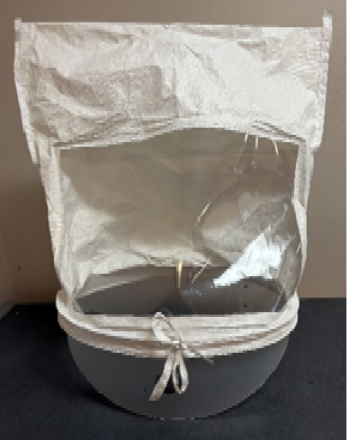
If undertaking a qualitative face fit test, you will need to be able to calmly tolerate wearing a respirator while having a large clear hood placed over your head for as long as 6 to 7 minutes. The image below is typical of the hoods used during the qualitative fit-test.
Do you conduct full-face respirator face-fit tests?
Yes, Onsite Testing conducts quantitative face fit tests suitable for full-face respirators in accordance with AS/NZS 1715:2009.
Request Quote
Request a Respirator Face Fit Testing Quote
Tell us about your workforce, respirator types, location and testing requirements, and our team will provide a free quote tailored to your workplace and schedule.
"*" indicates required fields