Our workplace noise monitoring services are designed to identify potential areas or processes where workers may be exposed to hazardous noise levels and help you meet your obligations under the Work Health and Safety Regulation 2011.
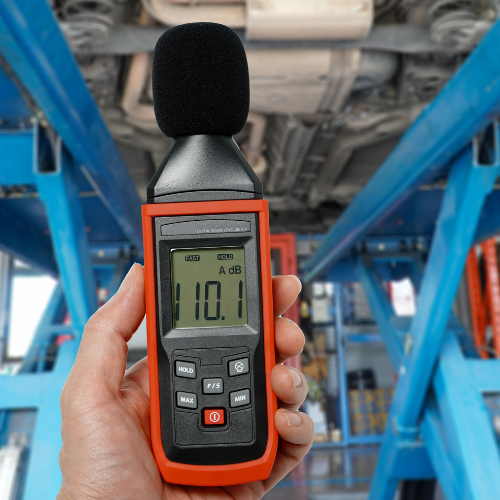
Using Class 1 Sound Level Meters, we can conduct sound level measurements of plant, equipment and work activities across the worksite and provide a detailed report that supports you to make informed decisions.
Our onsite services ensure minimal disruption to your operations, with results that support compliance and recordkeeping readiness.
Why it's needed
- From 29 July 2025, PCBUs (Employers) must provide audiometric testing for workers who need hearing protection due to noise levels exceeding the exposure standard:
- LAeq,8h of 85 dB(A)1, or (a worker’s average noise exposure over a standard 8 hour workday)
- LC,peak of 140 dB(C)2 (the loudest instantaneous noise peak a person is exposed to)
- Often workplaces have many or varied noise sources, or workers move in and out of noisy areas, and is not possible to easily determine if the noise levels exceed the exposure standard listed above. In these cases, a competent person should complete noise monitoring to determine the noise levels workers are exposed to.
- The results of noise monitoring will provide information to the PCBU (employer) that will help them decide:
o Whether or not the workers need to be provided with audiometric testing
o Appropriate hearing protection where other control measures are not practicable
o The effectiveness of any control measures
o What other measures to take to reduce noise - Failing to comply with audiometric testing requirements could result in penalties for the PCBU (Employers)
- Section 57(1) of the Work Health and Safety Regulation 2011 states that a PCBU (Employer) must manage risks to health and safety relating to hearing loss associated with noise, and
- Section 34 of the Work Health and Safety Regulation 2011 states that a PCBU must identify reasonably foreseeable hazards that
could give rise to risks to health and safety.
What it is
- We use Class 1 Sound Level Meters to measure sound levels of noise sources, analyse the results and report the outcomes.
- Noise monitoring is conducted to identify potential areas or processes where workers may be exposed to hazardous noise levels.
How it's done
- We perform noise monitoring using Class 1 Sound Level Meters. This involves recording sound level measurements of different noise sources (such as plant, equipment and work activities) during a typical working shift.
What’s included
- Onsite noise monitoring (sound level measurements taken of identified noise sources) using Class 1 Sound Level Meters.
- A noise monitoring report which provides the following details:
- Details of operation and address.
- The area where the noise testing was conducted and the measurements that were recorded for each different noise source.
- Analysis of results, including LAeq dB(A), LCpeak dB(C), LAmax, LA90.
- Recommendations.
Request a Quote (Noise Monitoring)
Frequently Asked Questions
What is noise monitoring?
Noise monitoring is a process used to calculate and report on sound level measurements from different noise sources in the workplace (plant, equipment, work activities) to identify potential areas or processes where workers may be exposed to hazardous noise levels. A PCBU (Employer) can use these results to determine whether a detailed noise assessment is required under the Qld Work Health and Safety Regulation 2011.